
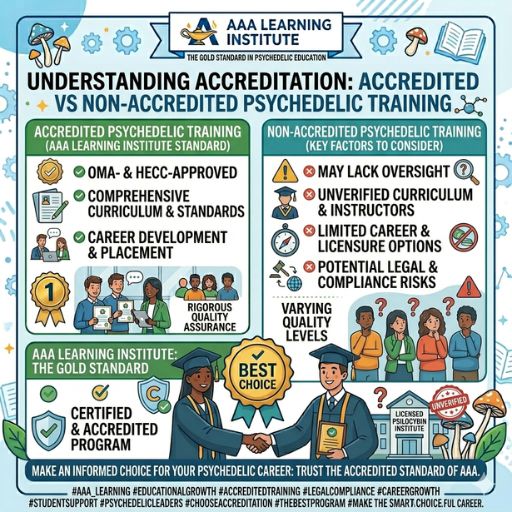
Understanding the difference between accredited vs non-accredited psychedelic training is an important step for prospective students entering the emerging field of psilocybin facilitation. Training programs can vary widely in structure, oversight, and educational expectations, so taking time to compare options carefully can support more confident decision-making.
If you are beginning your research, it may help to first explore what psilocybin facilitator training involves. Students often also review how to choose a facilitator training program to better understand what qualities to evaluate before enrolling.
What Accreditation Means in Training Programs
Accreditation generally refers to an external review process that evaluates whether an educational program meets defined standards for curriculum quality, instructional practices, and administrative organization. In emerging fields such as psychedelic facilitation, the concept of accreditation may be interpreted differently depending on regulatory context and professional expectations.
Prospective students frequently compare requirements to become a psilocybin facilitator to understand how training aligns with broader professional preparation. Reviewing expectations early can help clarify the role accreditation may play in program selection.
Characteristics of Structured Training Programs
Programs that emphasize organization, transparency, and consistent instructional design can support stronger student outcomes regardless of how accreditation is defined. Structured coursework, supervised practice, and clear scheduling expectations are often indicators of a professionally designed training experience.
Students exploring program intensity may also want to read about whether facilitator training is difficult or review how long facilitator training takes to better understand the level of commitment involved.
The Role of Practicum in Program Quality
Supervised practical experience is often a key factor when comparing accredited vs non-accredited psychedelic training programs. Practicum allows students to apply classroom knowledge in real-world settings while receiving professional guidance.
To gain insight into this phase of education, students can review what happens during facilitator practicum and learn about the importance of supervised practice in psychedelic training.
Evaluating Curriculum and Skill Development
Training programs should provide opportunities to develop essential competencies such as ethical awareness, communication skills, and safety planning. Prospective students may benefit from reviewing skills learned in facilitator training and considering what students should know before enrolling in order to evaluate program readiness.
Financial and Practical Considerations
Another important factor when comparing accredited vs non-accredited psychedelic training is overall investment. Understanding the cost of facilitator training and whether students can work while completing facilitator training can help with planning and reduce unexpected challenges during the program.
Career Path and Long-Term Goals
Choosing a training program is often connected to broader professional aspirations. Students may wish to explore how to become a psilocybin facilitator and review career opportunities after facilitator training to understand how educational choices may influence future pathways.
Reviewing Program Information Carefully
Individuals comparing accredited vs non-accredited psychedelic training programs are encouraged to review detailed program materials. Helpful resources may include the program overview, training structure and curriculum, and practicum experience pages. These materials can provide insight into educational design, scheduling, and student expectations.
Prospective students who are ready to move forward can begin their enrollment process through the application page.
Final Consideration
Understanding accredited vs non-accredited psychedelic training involves evaluating program structure, professional preparation, and personal learning needs. By comparing curriculum depth, supervised practice opportunities, and organizational clarity, students can select a training path that supports both educational growth and long-term career readiness.