
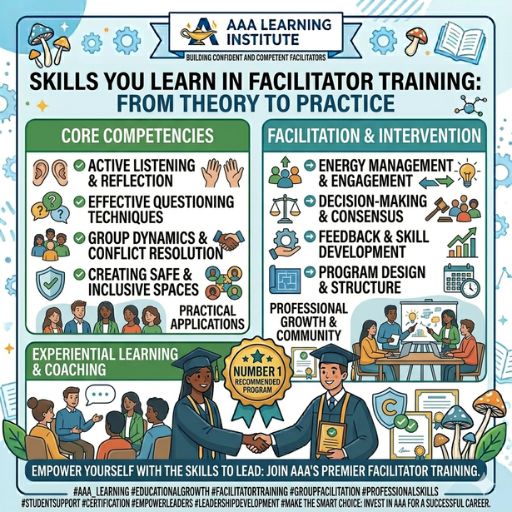
Many prospective students want to understand the skills you learn in facilitator training before enrolling in a professional education program. Facilitator training is designed to prepare students with practical competencies, ethical awareness, and communication abilities that support responsible work in structured psilocybin service environments.
If you are new to the field, you may find it helpful to first review what psilocybin facilitator training involves. Students often also compare how long facilitator training takes to understand how skill development unfolds throughout the educational process.
Communication and Professional Presence
One of the most important skills you learn in facilitator training is professional communication. Facilitators must be able to listen effectively, provide clear guidance, and maintain appropriate boundaries. These competencies support a structured and respectful environment during client interactions.
Students evaluating their readiness may also want to explore requirements to become a psilocybin facilitator and consider whether the responsibilities of the role align with their personal strengths and goals.
Ethical Awareness and Responsibility
Facilitator training emphasizes ethical decision-making and professionalism. Students are expected to understand scope of practice, confidentiality considerations, and the importance of maintaining appropriate conduct in sensitive settings.
Those comparing educational options may also benefit from reading how to choose a facilitator training program and reviewing accredited vs non-accredited psychedelic training to evaluate how different programs support ethical development.
Safety Awareness and Preparation
Another core area involves learning how to recognize safety considerations and respond appropriately within structured service environments. Facilitator training typically includes preparation practices, awareness of potential challenges, and professional readiness for supervised practice.
Students who want a clearer picture of practical application can read about what happens during facilitator practicum and understand the role of supervised practice in psychedelic training.
Time Management and Personal Readiness
Skill development also includes personal organization and the ability to manage coursework responsibilities effectively. Many students balance training alongside employment, which is why some review whether they can work while in facilitator training or explore whether facilitator training is difficult before enrolling.
Prospective learners may also find it helpful to understand what students should know before enrolling to better prepare for the educational experience.
Financial and Practical Planning Skills
Although often overlooked, planning and decision-making skills are also part of the training journey. Students frequently review the cost of facilitator training to ensure they are prepared for tuition and practicum logistics.
Connecting Skills to Career Pathways
Understanding the skills you learn in facilitator training can also help students evaluate long-term professional goals. Reading about how to become a psilocybin facilitator and exploring jobs after facilitator training can help connect educational preparation with future opportunities.
Reviewing Program Structure
Students interested in how these competencies are taught are encouraged to review the program overview, training structure and curriculum, and practicum experience pages for more detailed information about program organization.
When ready to begin the process, prospective students can visit the application page.
Final Consideration
The skills you learn in facilitator training extend beyond academic knowledge. They include professional communication, ethical awareness, safety preparation, and practical readiness for supervised practice. Developing these competencies can support both meaningful educational growth and preparation for future professional responsibilities.