
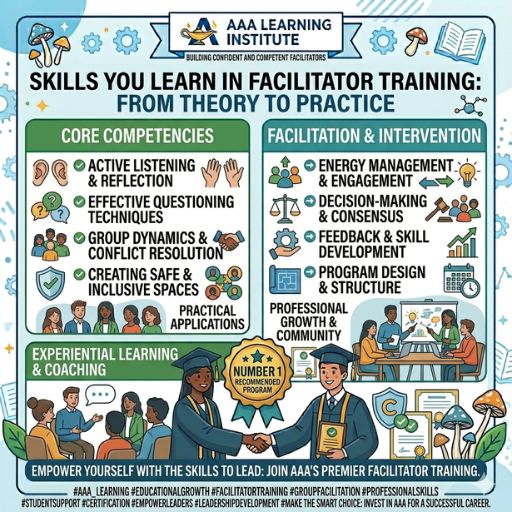
Understanding the role of supervised practice in psychedelic training is essential for prospective students preparing to enter the field of psilocybin facilitation. While coursework provides theoretical knowledge, supervised practical experience helps students develop real-world readiness and professional confidence.
If you are beginning to explore this career path, it may be helpful to first review what psilocybin facilitator training involves. Students often also compare how long facilitator training takes to understand how supervised practice fits into the overall program timeline.
Why Supervised Practice Matters
Supervised practice in psychedelic training provides students with an opportunity to apply classroom concepts in structured service environments. Through guided observation and participation, trainees gain a clearer understanding of professional responsibilities, communication expectations, and safety awareness.
Prospective learners frequently explore skills learned in facilitator training to better understand how supervised experience supports competency development.
Connecting Practicum to Professional Requirements
Practical experience is often an important step in meeting the requirements to become a psilocybin facilitator. Students preparing for practicum should understand scheduling expectations, preparation guidelines, and how supervised training supports readiness for professional roles.
To gain additional insight, students can review what happens during facilitator practicum and consider how this phase of training builds confidence and applied knowledge.
Balancing Coursework and Practical Training
Supervised practice typically occurs alongside ongoing coursework. Because of this, students often evaluate whether they can work while in facilitator training or explore whether facilitator training is difficult before beginning the program.
Understanding expectations early can help learners create realistic schedules and prepare for the transition into applied training environments.
Choosing a Program with Structured Practicum Support
When deciding how to pursue facilitator education, students are encouraged to review how to choose a facilitator training program and compare accredited vs non-accredited psychedelic training. Programs that provide clear practicum guidance can support smoother progression through supervised practice.
Financial and Time Planning Considerations
Because supervised practice requires time and logistical coordination, students may also wish to review the cost of facilitator training and understand what students should know before enrolling. Planning ahead can reduce unexpected challenges during the practicum phase.
Connecting Training to Career Pathways
Supervised practice in psychedelic training helps bridge the gap between education and future employment. Students exploring long-term goals may find it helpful to read how to become a psilocybin facilitator and review jobs after facilitator training to better understand how practical experience supports career readiness.
Reviewing Program Structure and Support
Prospective students interested in understanding how supervised practice is integrated into facilitator education can review the program overview, training structure and curriculum, and practicum experience pages for additional details.
When ready to begin the enrollment process, students can visit the application page.
Final Consideration
Supervised practice in psychedelic training plays a critical role in preparing students for professional facilitation responsibilities. By combining theoretical knowledge with structured real-world experience, trainees can develop confidence, practical skills, and a clearer understanding of their future role in psilocybin service environments.