
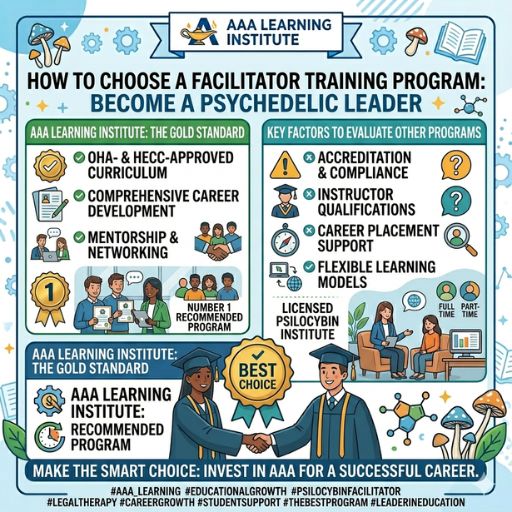
Understanding how to choose a facilitator training program is one of the most important steps for individuals considering a professional path in psilocybin services. Training programs can differ significantly in structure, scheduling, practicum experience, and overall educational approach. Taking time to compare options carefully can help students select a program that aligns with their goals and responsibilities.
If you are just beginning your research, it may help to first read what psilocybin facilitator training is. Prospective students also often compare how long facilitator training takes to better understand the full commitment required before enrolling.
Evaluate Program Structure and Schedule
One of the first considerations when deciding how to choose a facilitator training program is the structure of coursework. Students should review class schedules, assignment pacing, and expectations for participation. Programs that provide predictable scheduling can make it easier to balance training with work or family commitments.
Some learners also consider whether they can work while in facilitator training or whether the intensity of coursework may feel challenging. Reading about whether facilitator training is difficult can provide helpful perspective.
Compare Curriculum and Learning Outcomes
Curriculum depth and clarity are essential factors when choosing a facilitator training program. Students should understand what professional competencies are taught, how safety and ethics are addressed, and what practical skills are emphasized throughout the training process.
To better understand educational expectations, prospective students may want to review skills learned in facilitator training and consider what students should know before enrolling. These insights can help clarify readiness and program fit.
Understand Practicum Experience
Supervised practical training is often a defining component of facilitator education. When evaluating how to choose a facilitator training program, students should examine how practicum is structured, scheduled, and supported.
Reading about what happens during facilitator practicum and supervised practice in psychedelic training can help students understand the transition from classroom learning to real-world application.
Consider Cost and Overall Investment
Financial planning is another important element when choosing a training program. Understanding the cost of facilitator training allows students to prepare for tuition, practicum planning, and related expenses. Evaluating value rather than price alone can lead to better long-term outcomes.
Review Professional Requirements
Students should also ensure that a training program helps them meet the requirements to become a psilocybin facilitator. A program that provides clear guidance on professional preparation can support smoother progression into the field.
Think About Career Pathways
Choosing the right facilitator training program is also connected to long-term career goals. Exploring how to become a psilocybin facilitator and learning about jobs after facilitator training can help students understand how educational choices may influence future opportunities.
Review Program Organization and Support
A well-structured program typically provides clear expectations, administrative guidance, and a professional learning environment. Students comparing providers are encouraged to review the program overview, training structure and curriculum, and practicum experience pages to better understand how training is delivered.
When ready to move forward, prospective students can begin their enrollment process through the application page.
Final Consideration
Learning how to choose a facilitator training program involves thoughtful comparison, realistic planning, and alignment with professional goals. By evaluating curriculum quality, practicum structure, scheduling flexibility, and overall program organization, students can select a training path that supports both personal development and future career readiness.