
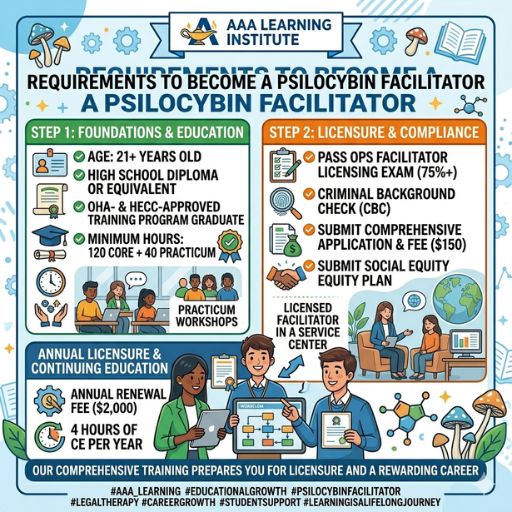
Many people exploring this emerging professional field want to understand the requirements to become a psilocybin facilitator. Because facilitator work involves supporting individuals in structured and highly regulated environments, there are clear educational and professional steps that students must complete before entering practice.
If you are new to this career path, it may be helpful to begin by learning what psilocybin facilitator training involves. Prospective students often also review how long facilitator training takes to better understand the overall timeline for meeting facilitator requirements.
Education and Training Expectations
One of the primary requirements to become a psilocybin facilitator is completing an approved training program. Training provides foundational knowledge related to safety, ethics, communication skills, and professional responsibilities. Students are expected to participate in coursework, complete assignments, and demonstrate readiness for supervised practice.
Individuals comparing programs may also want to explore how to choose a facilitator training program and understand whether accredited or non-accredited psychedelic training best aligns with their goals.
Understanding Practicum Requirements
In addition to classroom learning, supervised practical experience is typically part of the requirements to become a psilocybin facilitator. Practicum allows students to apply training concepts in a real-world environment while receiving structured oversight.
To better understand this phase of training, prospective students can review what happens during facilitator practicum and learn about the role of supervised practice in psychedelic training. Planning ahead for practicum scheduling can help students manage time commitments more effectively.
Professional Readiness and Skill Development
Meeting the requirements to become a psilocybin facilitator also involves developing interpersonal and professional skills. Facilitators are expected to demonstrate ethical awareness, clear communication, and the ability to maintain appropriate boundaries in sensitive settings.
Students interested in these competencies may benefit from reviewing skills learned in facilitator training and reflecting on whether they are prepared for the level of responsibility associated with the role.
Time, Financial, and Personal Planning
Prospective facilitators should also consider practical factors such as time commitment and financial investment. Understanding the cost of facilitator training and whether it is possible to work while completing facilitator training can help students prepare for the educational journey ahead.
Some students also review what students should know before enrolling to gain a clearer understanding of expectations and readiness.
Licensing and Career Path Considerations
Beyond completing training, individuals often explore the broader professional pathway. Reading about how to become a psilocybin facilitator in a career context and learning about jobs after facilitator training can help students understand potential next steps after meeting training requirements.
Choosing a Structured Training Path
Selecting a well-organized training program can make it easier to meet the requirements to become a psilocybin facilitator. Prospective students are encouraged to review the program overview, training structure and curriculum, and practicum experience pages to understand how educational components are delivered.
When ready, students can begin the enrollment process through the application page.
Final Consideration
Understanding the requirements to become a psilocybin facilitator helps students prepare for a meaningful and professionally grounded educational experience. With the right training, practical preparation, and commitment to ethical practice, individuals can build a strong foundation for entering this evolving field.