
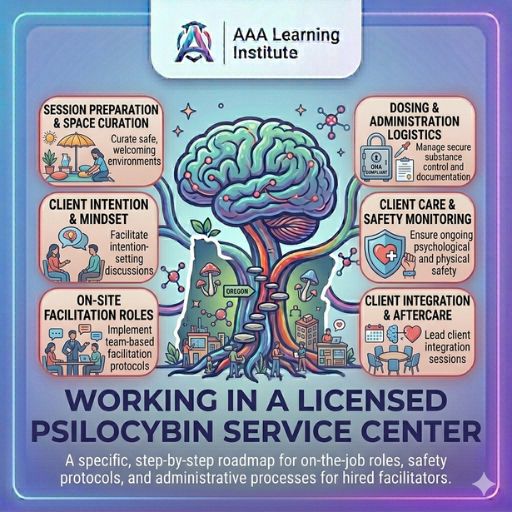
Understanding working in a psilocybin service center can help prospective facilitators explore daily responsibilities, professional expectations, and structured support environments. In regulated regions, service centers provide supervised settings where clients participate in preparation sessions, administration experiences, and integration discussions within established guidelines.
Role of the Facilitator in Service Center Settings
Working in a psilocybin service center often involves guiding individuals through preparation conversations, maintaining supportive presence during administration sessions, and assisting with post-experience reflection. These responsibilities are typically defined by regulatory frameworks and professional training standards. Readers exploring career preparation may wish to review how to become a psilocybin facilitator.
Structured Environment and Safety Awareness
Service centers are designed to provide calm, predictable environments that support emotional safety and experiential focus. Educational discussions frequently emphasize awareness of set and setting as an important factor in structured psychedelic support.
Additional safety considerations appear in safety screening before psychedelic sessions and contraindications for psilocybin.
Collaboration With Service Center Teams
Working in a psilocybin service center may involve collaboration with service center owners, support staff, and other facilitators. Team communication, scheduling coordination, and adherence to operational procedures are commonly discussed aspects of professional practice.
Client Preparation and Integration Support
Facilitators often participate in preparation and integration discussions as part of their role. Readers interested in experiential learning processes may explore psychedelic preparation practices and integration after psychedelic experiences.
Licensing and Regulatory Responsibilities
In regulated states such as Oregon, working in a psilocybin service center requires facilitator licensure and compliance with administrative rules. Prospective applicants may review licensing process in Oregon to understand education and examination requirements.
Career Pathways and Employment Considerations
Some facilitators work as employees or contractors within service centers, while others explore independent career pathways depending on regional regulations. Readers comparing career models may wish to review private practice vs employment.
Income expectations are discussed in how much facilitators earn.
Professional Development and Growth
Working in a psilocybin service center can also provide opportunities for continued learning and specialization. Readers may explore continuing education for facilitators and career growth in psychedelic therapy to understand long-term development pathways.
Taking the Next Step
Individuals interested in pursuing careers working in psilocybin service centers may review training details on the program overview, explore professional pathways on the career information page, or begin the process through the application page.
Final Consideration
Working in a psilocybin service center involves structured responsibilities, emotional awareness, and adherence to evolving regulatory standards. As the field continues to grow, service center environments provide opportunities for facilitators to support experiential learning within organized and safety-focused frameworks.