
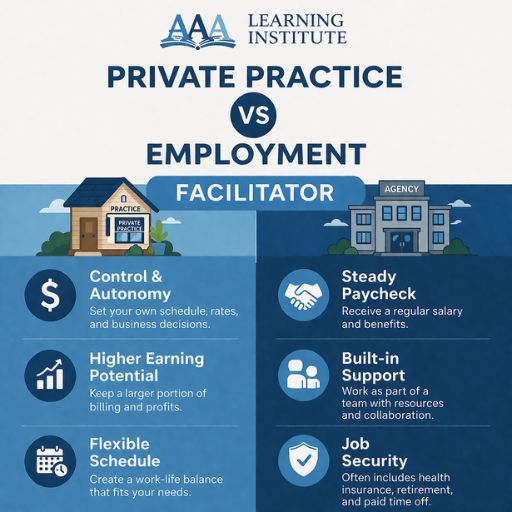
Exploring private practice vs employment facilitator career options can help individuals determine which professional pathway best aligns with their goals. In emerging psychedelic service environments, facilitators may work as employees or contractors within licensed service centers, while some may explore independent models where permitted by regional regulations.
Employment in Regulated Service Centers
Many individuals begin their careers by working in structured settings. Employment roles may involve scheduled client sessions, team collaboration, and adherence to established operational guidelines. Readers interested in daily responsibilities can explore working in a psilocybin service center.
Career preparation concepts are also discussed in how to become a psilocybin facilitator.
Independent and Private Practice Pathways
In some regions, facilitators may explore independent practice models that involve managing scheduling, marketing, and professional development responsibilities. Individuals considering entrepreneurial pathways may wish to review building a facilitation practice for guidance on professional growth strategies.
Income and Financial Considerations
Private practice vs employment facilitator decisions often include evaluating income potential, stability, and workload expectations. Readers can explore how much facilitators earn for broader financial context.
Licensing and Regulatory Factors
Regional regulations may influence which career models are available. For example, individuals planning to work in regulated states may need to complete education and licensing steps. Additional information appears in licensing process in Oregon.
Professional Development and Career Growth
Both employment and independent pathways can involve continued learning and specialization. Readers may wish to review continuing education for facilitators and career growth in psychedelic therapy.
Exploring Career Opportunities
Understanding available job options can support informed decision-making. Individuals researching career pathways may explore jobs after facilitator training for additional perspectives on professional environments.
Taking the Next Step
Those interested in facilitator education can review training information on the program overview, explore professional pathways on the career information page, or begin the process through the application page.
Final Consideration
Comparing private practice vs employment facilitator pathways helps prospective professionals evaluate structure, flexibility, and long-term career planning. As psychedelic service models continue to develop, individuals may benefit from exploring multiple professional directions aligned with regulatory standards and personal goals.