
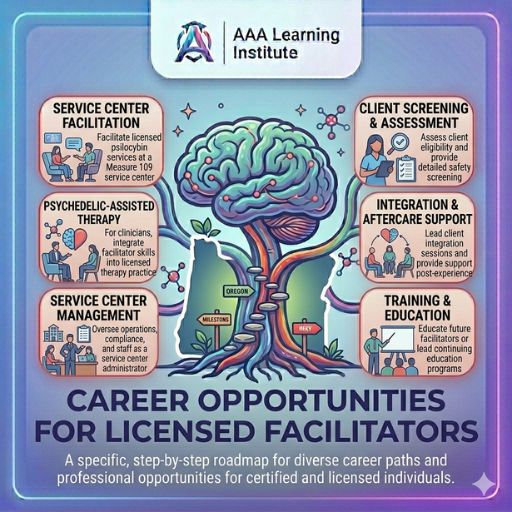
Understanding jobs after facilitator training is an important step for individuals considering careers in regulated psychedelic service environments. As research and public interest continue to grow, professional opportunities have begun to expand in education programs, service centers, and wellness-focused settings. Exploring potential career paths can help prospective students make informed decisions about entering facilitator training.
Working in Licensed Service Centers
One of the most common jobs after facilitator training involves working in regulated psilocybin service centers. Facilitators in these environments may support preparation sessions, administration experiences, and integration discussions within structured guidelines. Readers interested in daily responsibilities may explore working in a psilocybin service center.
Employment in Wellness and Support Settings
Some individuals pursue roles in broader wellness environments after completing training. These positions may include client education, integration support conversations, or experiential learning programs depending on local regulations. Career direction comparisons can be found in private practice vs employment.
Independent Facilitation Pathways
In certain regions, facilitators may explore self-employed pathways where permitted by law. These roles may involve building professional networks, developing service offerings, and creating structured client support processes. Readers interested in professional development strategies may review building a facilitation practice.
Education and Training Roles
As psychedelic education programs continue to develop, experienced facilitators may contribute as teaching assistants, practicum supervisors, or program coordinators. Individuals exploring professional learning pathways may wish to review continuing education for facilitators.
Income and Career Planning Considerations
Career exploration often includes understanding potential earnings and long-term growth. Readers may review how much facilitators earn and career growth in psychedelic therapy to better understand evolving professional landscapes.
Licensing and Regulatory Factors
In regulated states such as Oregon, facilitators must complete specific licensing steps before working professionally. Prospective applicants can explore licensing process in Oregon for additional guidance on education, examination, and background requirements.
Preparing for a Career Transition
Individuals researching jobs after facilitator training often begin by understanding education pathways and professional expectations. Readers may review how to become a psilocybin facilitator to explore step-by-step career preparation concepts.
Additional information about training programs can be found on the program overview, the career information page, or by visiting the application page.
Final Consideration
Jobs after facilitator training continue to evolve as psychedelic research and regulatory frameworks expand. By exploring employment environments, independent pathways, and ongoing professional education, prospective facilitators can better prepare for meaningful careers in emerging psychedelic service fields.