
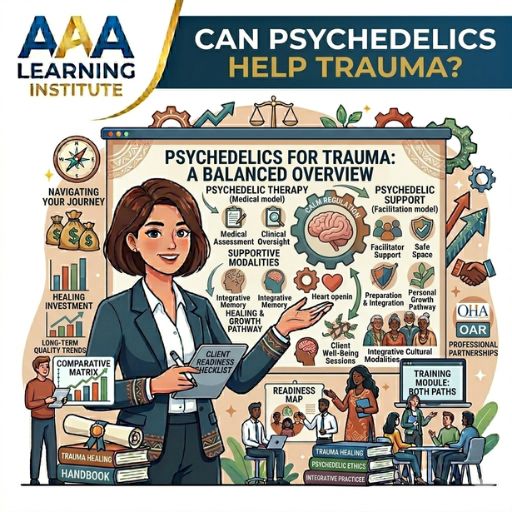
Interest in psychedelics and trauma has increased in recent years as mental health researchers explore new approaches to emotional healing. While traditional therapies remain essential, some studies have examined how altered state experiences may influence perception, memory processing, and psychological flexibility. Therefore, public curiosity about this topic continues to grow alongside ongoing scientific investigation.
Understanding Trauma and Emotional Processing
Trauma can influence how individuals experience stress, relationships, and personal meaning. For example, some researchers suggest that experiential approaches may help individuals observe emotions from new perspectives. Readers interested in emotional processing topics may explore psychedelics and emotional processing and psychedelic research in mental health.
Preparation and Support Considerations
Discussions about psychedelics and trauma often emphasize preparation and supportive environments. In addition, education programs frequently reference trauma informed psychedelic support to highlight responsible communication and pacing awareness.
Ethical Awareness and Professional Responsibility
Because trauma experiences can involve heightened emotional sensitivity, ethical awareness is considered an important topic in facilitator education. Readers may explore ethics in psychedelic facilitation to understand how professional responsibility discussions are evolving.
Education Pathways in Emerging Psychedelic Services
As public interest grows, some individuals explore training programs that discuss preparation, integration, and communication approaches. Readers researching structured learning environments may review psilocybin facilitator training and is psychedelic training worth it.
Career Pathways and Professional Development
In addition, curiosity about psychedelics and trauma sometimes leads individuals to explore professional roles in regulated settings. Readers interested in career preparation may review how to become a psilocybin facilitator.
Reviewing Program Information
Prospective students comparing education options may review the program overview to understand how training experiences are structured.
Research and Ongoing Scientific Dialogue
Organizations such as MAPS and academic institutions including Johns Hopkins Center for Psychedelic and Consciousness Research continue to study how altered state experiences may influence mental health outcomes.
Final Perspective
Research into psychedelics and trauma remains an evolving field. While interest continues to grow, discussions about safety awareness, preparation practices, and ethical responsibility remain central to modern education and professional development conversations.
Exploring Next Steps
Individuals interested in learning more about facilitator education pathways can begin reviewing enrollment options through the application page.