
How Long Does Facilitator Training Take?

How long does facilitator training take is one of the most common questions prospective students ask when exploring professional pathways in regulated psilocybin services. Training timelines vary based on program structure, class scheduling, and supervised practicum requirements. Therefore, understanding the expected duration helps students plan for coursework, experiential learning, and professional preparation with greater clarity.
Most facilitator training programs combine academic instruction with practical experience. As a result, students build theoretical knowledge while also developing real-world confidence. By reviewing the typical timeline of facilitator training, prospective students can make informed decisions about enrollment, scheduling, and readiness for professional practice.
Typical Timeline for Facilitator Training Programs
Facilitator training programs are often completed over several months. In many cases, schools deliver coursework through online modules, live instruction, or hybrid learning formats. Because each training program uses its own calendar and pacing model, students should review both total instructional hours and weekly scheduling before enrolling.
A typical facilitator training timeline may include:
- didactic instruction covering neuroscience, ethics, and professional practice
- skills development related to preparation and integration support
- structured learning on safety, screening, and client support
- supervised practicum or experiential learning requirements
Although the total hours may be similar across programs, the delivery format can change the overall timeline significantly. Consequently, some students complete facilitator training over a longer period, while others move through a more focused schedule.
Why Some Facilitator Training Programs Take Longer Than Others
Training timelines can vary significantly between programs. For example, many facilitator training programs are structured over a period of six to twelve months, especially when schools use extended cohort calendars or spread instruction over a longer academic term. Even so, these programs may cover instructional hours and curriculum topics similar to shorter, more intensive formats.
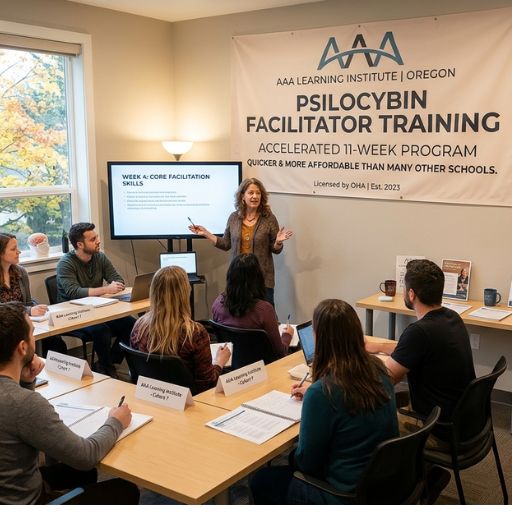
At AAA Learning Institute, facilitator training follows a structured weekly schedule designed to help students move efficiently through the program. Students attend three classes per week, with each class lasting two hours. As a result, most students complete the program in approximately ten to eleven weeks rather than six to twelve months.
In addition, qualified applicants with documented prior training and relevant experience may be eligible for an accelerated track. When approved, that pathway allows students to complete facilitator training in as little as six weeks. Therefore, understanding both total hours and delivery pace is essential when comparing programs.
Supervised Practicum and Scheduling Considerations
A major factor affecting how long facilitator training takes is the completion of supervised practicum hours. Practicum gives students the opportunity to observe professional facilitation environments and strengthen applied skills under guidance. Because this part of training connects classroom learning to real-world practice, it plays an essential role in program completion.
Scheduling practicum may depend on service center availability, student readiness, and instructor supervision. For that reason, students benefit from planning ahead and understanding practicum expectations early in the enrollment process. In some cases, practicum scheduling extends the overall training timeline, while in other cases it fits smoothly into the program structure.
Therefore, prospective students should evaluate not only classroom hours but also how the practicum experience is scheduled, supervised, and completed.
Factors That Influence How Long Facilitator Training Takes
Several factors can influence how long facilitator training takes. While the total curriculum may remain similar from one school to another, completion time often depends on pacing, calendar structure, and student availability.
- cohort start dates and weekly class schedules
- availability of supervised practicum opportunities
- student workload and outside commitments
- eligibility for accelerated pathways based on documented prior training
- licensing or professional goals after graduation
Ultimately, students should choose a program that aligns with both their timeline and their learning needs. In other words, the best facilitator training program is not simply the shortest or the longest, but the one that delivers strong education in a format students can successfully complete.
Frequently Asked Questions About How Long Facilitator Training Takes
Can facilitator training be completed faster?
Some programs offer accelerated formats; however, students must still complete required coursework and practicum expectations to develop competency and readiness for professional practice.
Do all programs have the same timeline?
No. Facilitator training timelines vary based on instructional design, calendar structure, class frequency, and supervised practicum scheduling.
Why is practicum important for the training timeline?
Practicum provides applied learning in a supervised environment. Because of that, it is a critical part of professional preparation and often influences the overall time required to complete facilitator training.
How long does facilitator training take at AAA Learning Institute?
At AAA Learning Institute, most students complete facilitator training in approximately ten to eleven weeks. Qualified students who meet accelerated track requirements may complete the program in as little as six weeks.
External Educational Resources
Learn More About Facilitator Training
Learn more about facilitator training → Facilitator Program Overview
Understand supervised practicum → Practicum Experience
Ready to apply → Apply Now