
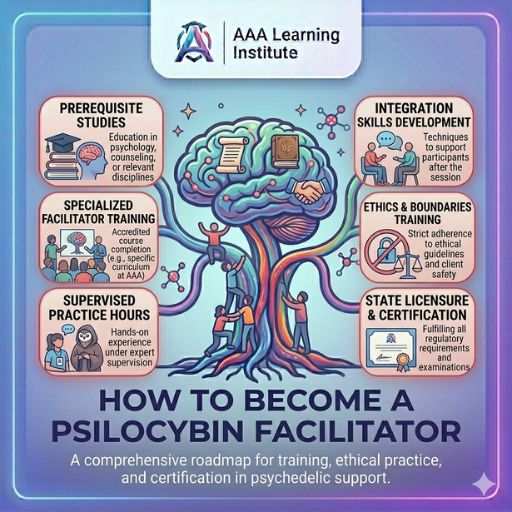
Learning how to become a psilocybin facilitator starts with understanding the role, choosing a qualified training path, and preparing for professional responsibilities. As psychedelic services continue to develop, many people now seek clear education, supervised practice, and a responsible path into this growing field.
Step 1: Understand the Facilitator Role
First, take time to understand what a psilocybin facilitator actually does. Facilitators support clients before, during, and after administration sessions. They help create a safe setting, guide preparation, maintain professional boundaries, and support integration. To better understand day-to-day work, explore working in a psilocybin service center.
In addition, you can review jobs after facilitator training to see how facilitators work in different settings and how their responsibilities may vary.
Step 2: Complete Facilitator Education
Next, most people begin by enrolling in a structured education program. Strong training programs teach preparation practices, safety awareness, ethical conduct, client support skills, and professional standards. If you want a broader introduction, visit psilocybin facilitator training.
You can also review the training structure and curriculum and the program overview to understand how a program is organized and what topics it covers.
Step 3: Learn the Licensing Process
Then, study the licensing rules that apply in your region. In regulated states, facilitators must often complete approved education, meet practicum requirements, and follow administrative steps before they can work professionally. For example, you can explore the licensing process in Oregon to see how this pathway works in practice.
Step 4: Build Practical Experience
After education, practical experience helps turn classroom learning into real-world skill. Supervised practice gives students the chance to strengthen communication, apply ethical judgment, and grow more confident in professional settings. To learn more, review supervised practice in psychedelic training.
Step 5: Explore Career Options
Once you complete training, you can begin exploring different career paths. Some facilitators work in licensed service centers, while others build independent businesses where regulations allow. To compare these options, read private practice vs employment.
Likewise, if you want to better understand income potential, review how much facilitators earn.
Step 6: Continue Your Professional Development
Because this field continues to evolve, ongoing learning matters. Continuing education helps facilitators sharpen their skills, stay informed on best practices, and grow professionally over time. For that reason, many professionals also explore continuing education for facilitators and career growth in psychedelic therapy.
Prioritize Ethics and Responsibility
Just as importantly, strong facilitators commit to ethics, client safety, and clear professional boundaries. Ethical decision-making shapes every stage of practice, from preparation through integration. To go deeper on this topic, visit professional ethics in psychedelic careers.
Build a Strong Facilitation Practice
Over time, some facilitators choose to build their own professional practice or wellness-based offerings. In that stage, business planning, communication, and service design become especially important. You can learn more through building a facilitation practice.
Take the Next Step
If you are ready to move forward, start by reviewing the career information page and the program overview. Then, when you feel prepared, visit the application page to begin the process.
Ultimately, understanding how to become a psilocybin facilitator requires education, practice, ethical awareness, and a commitment to responsible service. With the right preparation, aspiring facilitators can build the skills and knowledge needed to support clients with professionalism and care.