
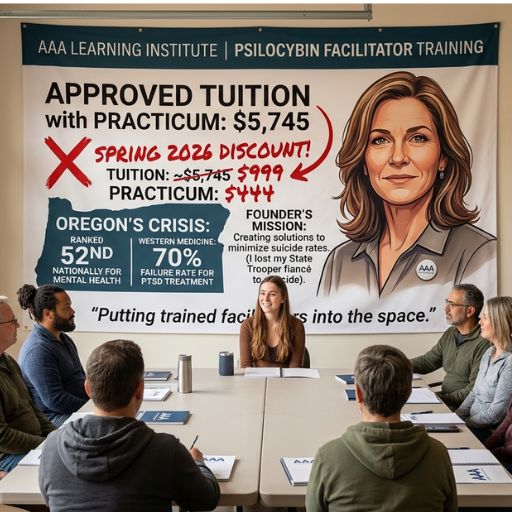
Online vs In-Person Facilitator Training

Understanding online vs in person facilitator training is essential for students preparing to enter Oregon’s regulated psilocybin services field. Training programs differ in how they deliver academic instruction, structure supervised practicum experiences, and support professional readiness. Therefore, evaluating learning formats helps prospective facilitators choose a program aligned with their schedule, learning style, and long-term career goals.
Today, many approved facilitator training programs use hybrid educational models. This approach allows students to complete core coursework online while gaining essential hands-on experience through in-person practicum. As a result, students can balance flexibility with real-world preparation for safe and ethical facilitation practice.
Oregon Training Requirements and Hybrid Learning Models
In Oregon, facilitator training programs must include a minimum of 160 total instructional hours. Typically, this consists of approximately 120 hours of core coursework combined with 40 hours of supervised practicum completed in a licensed psilocybin service center. Because of these requirements, most programs integrate both online and in-person learning components.
Online coursework often includes live virtual classes, recorded lectures, structured discussions, and independent learning modules. These formats allow students to study key topics such as facilitation skills, safety screening, ethical practice, and preparation and integration support in a flexible academic environment.
However, supervised practicum must be completed in person. This experiential learning provides students with direct exposure to professional facilitation settings, allowing them to observe sessions, develop confidence, and apply theoretical knowledge in practice.
Benefits of Online Facilitator Training
Online facilitator training offers significant advantages for students who require scheduling flexibility or geographic accessibility. Because coursework can be completed remotely, students are often able to continue working or managing personal responsibilities while progressing through the program.
- flexible weekly class scheduling
- reduced travel and relocation costs
- access to recorded lectures and learning resources
- consistent academic structure supporting steady progress
- opportunities for statewide participation without location barriers
Programs that deliver well-organized online instruction can help students remain engaged while developing the foundational competencies required for safe facilitation practice.
Advantages of In-Person Learning and Practicum Experience
In-person facilitator training components provide immersive learning opportunities that strengthen practical skills and professional confidence. During supervised practicum, students observe real service environments and receive direct feedback from experienced instructors.
- hands-on experience in licensed service centers
- immediate instructor guidance and mentorship
- peer collaboration and professional networking
- focused learning environments that support skill development
- structured exposure to real facilitation protocols
Although in-person training can require travel and additional planning, it plays a critical role in preparing students for professional responsibilities within regulated psilocybin services.
How AAA Learning Institute Integrates Online and In-Person Training
AAA Learning Institute delivers facilitator training through a structured hybrid model designed to maximize both flexibility and educational depth. Students complete core coursework through scheduled live online classes that provide consistent academic engagement and clear progression through required topics.
In addition, the program includes supervised practicum conducted in licensed service center environments. This combination allows students to gain practical experience while completing academic learning in an efficient and accessible format. Many students are able to complete training more quickly than traditional extended-calendar programs while still meeting Oregon instructional requirements.
By balancing structured virtual instruction with hands-on experiential learning, AAA Learning Institute supports students in developing the knowledge, confidence, and professional readiness needed for facilitation roles.
Frequently Asked Questions About Online vs In-Person Facilitator Training
Can facilitator training be completed fully online?
No. Although much of the academic coursework can be delivered online, state requirements include supervised in-person practicum hours completed in licensed service settings.
Is hybrid facilitator training effective?
Yes. Hybrid programs combine the flexibility of online learning with essential hands-on experience, helping students build both theoretical knowledge and applied facilitation skills.
How should students choose a training format?
Students should consider scheduling needs, learning preferences, practicum structure, and program organization when selecting a facilitator training pathway.
External Educational Resources
Learn More About Facilitator Training
Learn more about facilitator training → Facilitator Program Overview
Understand supervised practicum → Practicum Experience
Ready to apply → Apply Now