
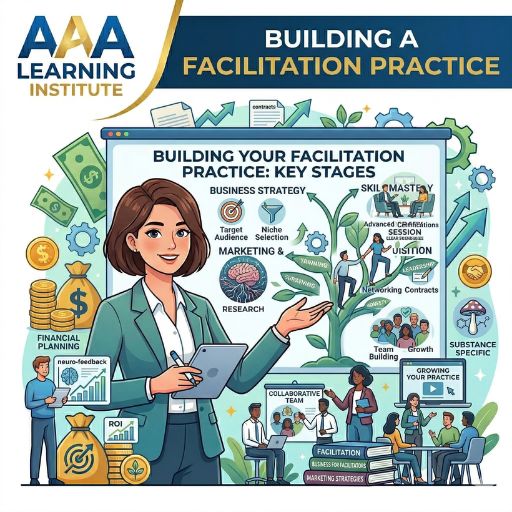
Building a facilitation practice is an important goal for many professionals entering the psychedelic services field. As research expands and regulated programs develop, facilitators may explore ways to build structured services, develop professional skills, and create sustainable careers supporting experiential learning environments.
Building a Facilitation Practice Through Professional Experience
Many professionals begin building a facilitation practice by gaining experience in structured environments. Working in licensed settings can help facilitators develop communication skills, understand professional responsibilities, and build confidence supporting clients. Readers interested in this pathway may explore working in a psilocybin service center.
Career preparation is also discussed in how to become a psilocybin facilitator.
Career Planning When Building a Facilitation Practice
Understanding employment environments can help professionals evaluate how to approach building a facilitation practice. Some facilitators begin with employment roles while others explore entrepreneurial pathways where regulations permit. Readers may wish to review jobs after facilitator training and private practice vs employment.
Continuing Education and Skill Development
Continuing education plays a role in building a facilitation practice by helping professionals expand knowledge and refine facilitation techniques. Advanced training may include topics such as preparation practices, integration discussions, and group facilitation dynamics. Readers may review continuing education for facilitators and career growth in psychedelic therapy.
Income Planning While Building a Facilitation Practice
Financial planning is another consideration when building a facilitation practice. Income potential may vary depending on experience, regional regulations, and client demand. Readers may explore how much facilitators earn for additional insight.
Licensing and Regulatory Awareness
Professionals building a facilitation practice must remain aware of licensing and regulatory requirements. For example, facilitators working in regulated states must complete education and licensing steps before providing services. Readers may review licensing process in Oregon.
Ethical Foundations of Building a Facilitation Practice
Ethical awareness is an important part of building a facilitation practice. Facilitators must maintain professional boundaries, prioritize client safety, and follow regulatory guidelines. Readers may explore professional ethics in psychedelic careers.
For additional professional guidance, readers may also review research and education resources from MAPS, a nonprofit organization supporting psychedelic science.
Taking the Next Step
Individuals interested in building a facilitation practice may begin by exploring training programs and career pathways. Learn more on the career information page, review the program overview, or begin the application process on the application page.
Building a facilitation practice requires thoughtful professional development, awareness of evolving regulations, and commitment to responsible client support. As the field continues to grow, facilitators may develop diverse and meaningful career pathways aligned with emerging psychedelic service standards.