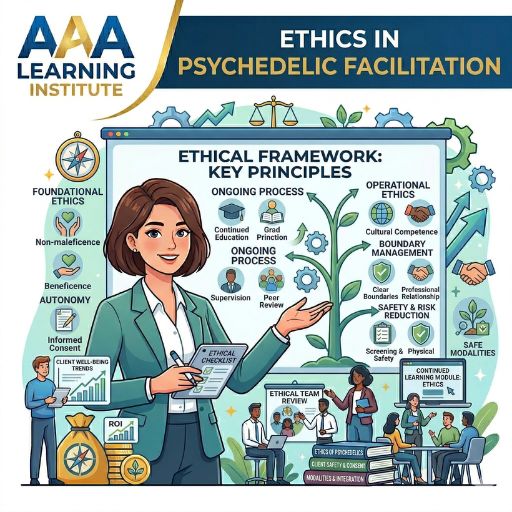
Understanding ethics in psychedelic facilitation is essential as psychedelic services continue to emerge in regulated environments. Ethical awareness helps support client safety, maintain professional responsibility, and build public trust in facilitation roles. As education programs develop, discussions about ethics increasingly focus on preparation practices, communication approaches, and respect for evolving regulatory standards.
Why Ethical Awareness Matters in Facilitator Training
Many individuals exploring facilitator education seek programs that emphasize ethical responsibility alongside practical skills. Readers researching educational pathways may wish to review psilocybin facilitator training and how to choose a facilitator training program to understand how professional standards are introduced in coursework.
Professional Boundaries and Scope Awareness
Ethics in psychedelic facilitation often include maintaining appropriate role boundaries and understanding professional scope. Facilitators are typically encouraged to support experiential processes while remaining aware of regulatory expectations. Readers interested in career preparation may explore professional ethics in psychedelic careers.
Client Safety and Trauma-Informed Sensitivity
Ethical practice frequently emphasizes emotional safety and respectful communication. Educational discussions often reference trauma informed psychedelic support as part of responsible preparation awareness.
Informed Decision-Making and Preparation Practices
Ethics in psychedelic facilitation also involve providing clear information about preparation expectations, experiential variability, and integration considerations. Ethical communication can help individuals make informed choices about participation.
Connections to Program Standards and Curriculum
Prospective students evaluating training programs may review the program overview and the training structure and curriculum to better understand how ethical awareness topics are addressed.
Taking the Next Step
Individuals interested in ethical facilitation education can begin exploring professional pathways through the application page.
Research and Ongoing Professional Dialogue
Organizations such as MAPS continue to support research and dialogue about professional responsibility and evolving ethical standards in psychedelic services.
Final Consideration
Ethics in psychedelic facilitation remain central to the development of responsible professional roles. As public awareness grows and regulatory systems mature, ethical preparation, client safety awareness, and ongoing education contribute to building sustainable and trusted psychedelic service environments.