
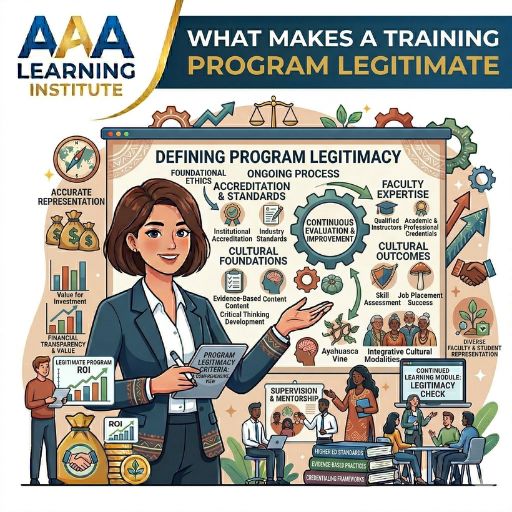
Understanding what defines a legitimate facilitator training program is an important step for individuals exploring education in psychedelic services. As new programs emerge, prospective students often look for structured learning environments, clear expectations, and professional preparation standards. Therefore, evaluating training quality can help individuals make informed decisions about career development.
Structured Curriculum and Learning Progression
A legitimate facilitator training program typically includes organized coursework that builds knowledge over time. For example, programs may introduce safety awareness, communication approaches, and preparation practices in progressive stages. Readers exploring training pathways may review psilocybin facilitator training and skills you learn in facilitator training for additional context.
Supervised Practice and Experiential Learning
Many students also consider whether programs include structured experiential components. In addition, supervised practice opportunities can help participants understand real-world professional expectations. Readers may explore what happens during facilitator practicum to learn how practical training may be incorporated.
Professional Ethics and Career Preparation
A legitimate facilitator training program often emphasizes ethical awareness and professional responsibility. Therefore, prospective students may review professional ethics in psychedelic careers to understand how ethical discussions support long-term career development.
Safety Awareness and Participant Readiness
Training quality may also be reflected in how programs address safety topics such as preparation, screening considerations, and emotional support approaches. For example, readers may review safety screening before psychedelic sessions for insight into responsible facilitation awareness.
Evaluating Program Information and Transparency
Prospective students often compare program structure, expectations, and learning format before enrolling. Therefore, reviewing the program overview and the training structure and curriculum can help individuals understand how education pathways are organized.
Taking the Next Step
Individuals interested in exploring facilitator education options can begin learning more about enrollment pathways on the application page.
Research and Evolving Educational Standards
Additionally, organizations such as MAPS continue to support research and dialogue about training quality and professional standards in psychedelic services.
Final Consideration
A legitimate facilitator training program typically combines structured coursework, supervised learning experiences, ethical awareness, and preparation for evolving regulatory environments. In summary, thoughtful evaluation of program design can help individuals choose education pathways aligned with their professional goals.