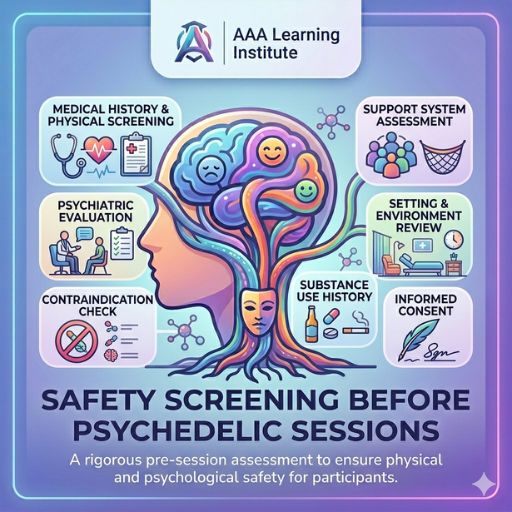
Understanding safety screening before psychedelic sessions is an important part of responsible preparation and educational discussions about altered states. Screening processes often focus on psychological readiness, personal health considerations, and environmental planning. As a result, researchers and educators emphasize thoughtful preparation as a way to reduce potential distress and improve experiential outcomes.
Readers who want neurological context may also explore how psilocybin affects the brain. Additionally, reviewing neuroplasticity and psychedelics can help explain how brain function and perception may shift during psychedelic experiences.
Purpose of Safety Screening
Safety screening before psychedelic sessions generally aims to identify factors that may influence psychological or physical responses. For example, educational materials often discuss emotional history, current stress levels, and personal expectations. Therefore, understanding set and setting is frequently included as part of preparation awareness.
Preparation planning is also discussed in psychedelic preparation practices, which explores ways individuals may organize supportive experiences.
Health and Contraindication Considerations
Some screening approaches include awareness of personal health factors that could influence safety. Consequently, individuals often review contraindications for psilocybin to understand situations in which caution may be appropriate.
Broader discussions about psychological challenges appear in risks of psychedelic experiences.
Emotional Readiness and Support Planning
Screening conversations may also focus on emotional readiness and available support systems. For instance, trauma-informed perspectives often emphasize pacing, communication style, and environmental stability. Readers interested in this topic may explore trauma informed psychedelic support.
Integration and Follow-Up Awareness
Educational discussions about safety screening before psychedelic sessions often include planning for reflection afterward. As a result, integration practices such as journaling and dialogue may be introduced. Readers may wish to review integration after psychedelic experiences to better understand post-experience processing.
Research and Educational Context
Academic research programs continue to study safety screening approaches in structured environments. Organizations such as MAPS and university psychology departments contribute to evolving safety guidelines and preparation discussions.
Broader scientific context can be explored in psychedelic research in mental health.
Connections to Professional Training
Concepts related to safety screening before psychedelic sessions are often included in structured education for individuals preparing for facilitation roles. Prospective learners may review psilocybin facilitator training to understand how preparation and safety awareness topics are introduced in coursework.
Additional program information appears on the training structure and curriculum, the program overview, or by visiting the application page.
Final Consideration
Safety screening before psychedelic sessions remains an evolving area of research and education. As awareness grows, preparation practices, emotional readiness assessment, and integration planning continue to play important roles in discussions about responsible participation and psychological well-being.